Core Keywords
- Mother
- Emotions
- Intuition
- Instincts
- Moods
- Feelings
- Expression
- Hunches
- Inner World
Stronger / Positive Expression
Emotional stability, intuition, healthy instincts and stronger inner balance
Challenging / Negative Expression
Emotional instability, moodiness, insecurity, poor emotional regulation or difficulty trusting instinct
What does the Moon represent in astrology?
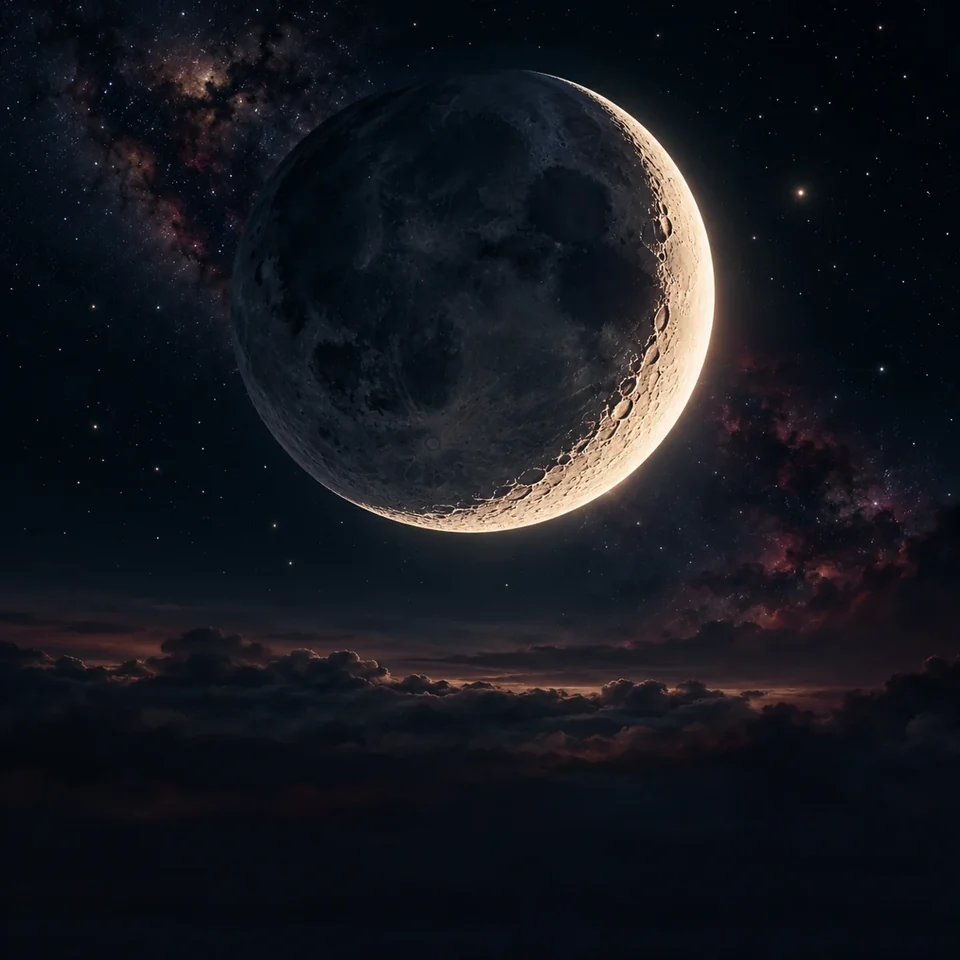
The Moon is associated with emotions, instincts, moods, feelings and the inner world. The mother, intuition, hunches and emotional expression are also established themes. It concerns how a person experiences circumstances inwardly, including responses that arise before they have been fully explained or organised into a decision.
An emotional response is not the same as a considered judgement. Someone can feel unsettled in a situation they know is practically sound, or feel comfortable with something that still requires examination. The Moon helps describe that inner response without making every feeling an objective assessment of the outside world.
The relationship with the mother may also be relevant, but it should be interpreted through the individual chart and circumstances. Emotional patterns and family relationships can be connected without being reduced to one cause or one universal story.
How the Moon operates
Lunar themes become visible in what a person reacts to, what reassures them and how feelings are expressed. A change in tone, an unfamiliar environment or a relationship dynamic may affect them before they can clearly say why.
Instinct can be useful because not every situation allows time for deliberate analysis. At the same time, a strong feeling may reflect an existing worry or expectation rather than what is currently happening. Understanding the Moon involves distinguishing sensitivity, intuition and mood, rather than treating them as identical.
The outward expression can vary considerably. Some people show emotions immediately; others experience them intensely but disclose little. The sign and wider horoscope help explain the style, while the Moon's condition contributes to the quality of the experience.
A strong Moon
Constructive expression supports emotional stability, healthy instinct and a stronger inner balance. Feelings can be recognised without overwhelming every decision, and the person may be able to respond sensitively while maintaining a sense of proportion.
Stability does not mean feeling happy all the time. It can mean being able to experience disappointment, recover from it and continue to relate to others without losing one's own centre. A strong expression leaves room for both emotion and reflection.
Intuition may also become more useful when it is considered alongside available facts. The person can notice an impression, examine it and decide how much weight it deserves rather than either dismissing every feeling or obeying it automatically.
A challenged Moon
Difficult expression can involve insecurity, moodiness, emotional instability or difficulty regulating a response. A person may find that a small event produces a much larger inward reaction, or that their confidence in a situation changes with their mood.
This can affect relationships because another person may not understand what has shifted. Withdrawal, reassurance-seeking or reactive communication may complicate an otherwise manageable disagreement. The interpretation should describe the pattern carefully rather than use emotional language as a criticism of character.
Circumstances involving the mother or another relevant family connection may also be important. The chart needs to distinguish an inner experience from an external event affecting someone close to the person.
The Moon through the Houses
The occupied House shows where emotional involvement, instinct and sensitivity become especially relevant. A professional connection may make work circumstances emotionally significant, while a domestic placement may connect feelings more directly with the home environment.
The House does not decide whether the emotional experience is constructive. That depends on the Moon's condition and the other relevant chart factors. Caring deeply about an area of life can be a source of engagement or a source of vulnerability in different circumstances.
The Moon as a House ruler
Where the Moon rules a House, that subject remains connected with its placement. Developments in the ruled area may therefore affect the person's inner experience or interact with another important life area.
This helps explain why an apparently practical issue can carry strong emotional meaning. The connection needs to be read through the whole chart rather than treated as proof that feelings alone determine the outcome.
The Moon through time
The Moon moves quickly, so its changing position operates on a different scale from the long periods described by slower bodies. A temporary mood or immediate emphasis should not be confused with a complete explanation of a multi-year situation.
The natal Moon provides a more enduring part of the person's emotional pattern. A useful reading distinguishes that underlying disposition from the circumstances and changing influences affecting it at a particular time.
Reading the Moon in context
Sign, House, rulership and condition all contribute to the interpretation. The Sun and Mercury also matter when considering identity, thought and emotional response together. A person may think one way, feel another and need time to bring the two into a workable decision.
The purpose is to understand those relationships, not label someone as emotional or unemotional. The complete horoscope provides a more accurate and humane picture than one isolated lunar placement.